Market Commentary and Fund Performance
The Portfolio Managers of Tokyo-based SPARX Asset Management Co., Ltd., sub-advisor to the Hennessy Japan Fund, share their insights on the Japanese market and Fund performance.
-
 Masakazu Takeda, CFA, CMAPortfolio Manager
Performance data quoted represents past performance; past performance does not guarantee future results. The investment return and principal value of an investment will fluctuate so that an investor’s shares, when redeemed, may be worth more or less than their original cost. Current performance of the fund may be lower or higher than the performance quoted. Performance data current to the most recent month end, and standardized performance can be obtained by viewing the fact sheet or by clicking here.
Market Highlights
Japanese equities advanced in August 2026, with the TOPIX rising 3.54% month-over-month.
The equity market moved higher during the first half of the month. Although export-related stocks initially came under pressure due to yen appreciation following a coordinated foreign exchange intervention by the Japanese and U.S. authorities, falling crude oil prices and solid quarterly earnings supported investor sentiment. In addition, softer-than-expected U.S. employment data and moderating inflation indicators reduced expectations for further U.S. interest rate hikes, supporting market performance in artificial intelligence (AI) and semiconductor-related stocks. As a result, the Nikkei 225 briefly approached the 70,000 level, while TOPIX continued to reach new record highs.
During the latter part of the month, Japanese equities declined as geopolitical tensions in the Middle East resurfaced and long-term interest rates in Japan, the U.S., and Europe moved higher, reinforcing expectations for further increases in global interest rates. Selling pressure was particularly evident in AI- and semiconductor-related names, which had led the market earlier in the month. Subsequently, while the Nikkei 225 traded without a clear direction, investor interest rotated toward cyclical, domestic demand-oriented, and financial stocks, which had lagged the broader market, helping the TOPIX hold up relatively well.
Toward month-end, the equity market temporarily weakened following hawkish remarks from the U.S. Federal Reserve Chair. However, losses were largely recovered, and the TOPIX finished the month higher compared to the end of July.
The Fund’s Performance
In August, the Fund (HJPIX) returned 3.37%, underperforming the Russell/Nomura Total Market™ Index, which returned 4.34% for the one month ended August 31, 2026.
The month's positive performer among the Global Industry Classification Standard (GICS) sectors included shares of Industrials, Materials, and Information Technology while Financials, Communication Services, and Real Estate detracted from the Fund’s performance.
Among the best performers were our investments in Recruit Holdings Co., Ltd., Japan’s unique human resources (HR) and media company and the owner of U.S.-based online job advertisement subsidiary "Indeed", Sony Group Corporation, a leading global entertainment, technology, and electronics conglomerate, and Hitachi, Ltd., one of Japan’s oldest electric equipment & heavy industrial machinery manufacturers.
As for the laggards, Tokio Marine Holdings, Inc., Japan’s largest general insurance company with arguably the best underwriting track record and successful overseas expansion, Sompo Holdings, Inc., one of Japan's leading insurance groups, with non-life insurance serving as its core business, and Daikin Industries, Ltd., the leading global manufacturer of commercial-use air conditioners.
August Commentary
Recently in Japan, there has been active debate surrounding the accounting treatment of goodwill on the acquirer's side in merger and acquisition (M&A) transactions. However, according to a Nikkei article published on July 23, the current requirement for regular amortization is now expected to remain in place.
Goodwill represents the excess of a purchase price over the fair value of a target company’s net assets that cannot be specifically allocated to identifiable intangible assets, such as trademarks or customer relationships. It is recognized as an asset on the balance sheet.
Under Japanese accounting standards (“J-GAAP”), companies are required to amortize their goodwill through the income statement over a period of up to 20 years. This occurs even in the absence of any impairment risk. Although goodwill amortization is a non-cash expense, it directly reduces reported accounting profits.
Generally speaking, we believe goodwill amortization should be added back to reported earnings when assessing a business’s underlying cash earnings power—provided there is no evident impairment risk relating to the acquired assets.
Furthermore, in certain cases, goodwill may possess economic value well in excess of the amount recorded on the balance sheet. Consider an acquisition in which a buyer pays $110 million for a business with net assets and annual profit of $10 million and $1 million, respectively. Under the current accounting regime, the transaction would generate $100 million of goodwill. At first glance, it may appear that the acquirer has overpaid for a business with lackluster earnings and limited underlying assets. But, what if this business were to generate $10 million of profit a year later and, better yet, $50 million a few years down the road. Under such circumstances, the economic value of goodwill could reasonably be regarded as greater than its reported accounting value.
While we do not advocate capitalizing this post-acquisition "appreciated goodwill" as an accounting asset, we believe J-GAAP’s blanket assumption—that goodwill inherently declines in value over time—is overly simplistic.
Under International Financial Reporting Standards (IFRS) and U.S. GAAP, the prevailing accounting standards in Europe and the United States, goodwill is not amortized on a fixed schedule. Instead, it is subject to impairment testing and written down only when there has been a significant destruction of value.
As a result, the decision by Japan's Financial Accounting Standards Foundation (“FASF”), which is responsible for developing the country's accounting standards, to maintain the current framework means the divergence from global standards will persist, leaving J-GAAP companies1 operating under a different set of rules.
While this difference places J-GAAP companies at a disadvantage in terms of international comparability, it is beneficial for our Fund, where disciplined and thorough financial analysis underpins our investment decisions.
Companies with substantial goodwill amortization charges often appear less profitable at first glance, making their shares more likely to be overlooked and undervalued. For investors seeking opportunities where market prices trade at a discount to intrinsic value, this can be a compelling hunting ground. In essence, these accounting differences create inefficiencies within the Japanese equity market.
A prime example in our portfolio is Seven & i Holdings. Following its 2021 acquisition of U.S.-based Speedway, the company records annual amortization of the resulting goodwill. This creates a wide gap between reported bottom-line profits and earnings before goodwill amortization, which we believe better reflect the underlying economics of the business. According to the company's financial results for the fiscal year ended February 2026 under J-GAAP, reported earnings per share (EPS) was JPY 118.81 ($0.77). By contrast, EPS before goodwill amortization stood at JPY 161.74 ($1.05)—nearly 40% higher.
For the Fund to achieve above-average investment returns, it is not enough for us to recognize the potential of our investee companies; the broader market must ultimately come to a similar conclusion. In some respects, stock markets are like a casino in which anyone is free to participate. As such, we suspect only a minority of investors might analyze in detail beyond the surface-level accounting figures.
If most investors pay little attention to such accounting minutiae (though we don't think they are minutiae), one might think these valuation gaps will never close. However, we believe that the "real" value we regard as economically meaningful will eventually manifest itself in one form or another.
For instance, companies whose cash-based profits are significantly higher than their accounting profits should accumulate cash more quickly than it may seem on the surface. That surplus capital can be deployed into growth investments that can enhance competitive advantages. It can also facilitate stronger shareholder returns, including higher dividends. In this manner, strong cash flow generation that exceeds reported accounting profits should ultimately be reflected in tangible outcomes.
Based on our valuation, Seven & i trades on a forward price to earnings (P/E) ratio of approximately 12x based on earnings before goodwill amortization, while generating a free cash flow yield of more than 10%. If management continues to repurchase shares at the same pace as last year, the total capital return yield, comprising of dividends and share buy-backs, should also be in the low-teens. For these reasons, we continue to regard the company as exceptionally undervalued.
Click here for a full listing of Holdings.
- In this article:
- Japan
- Japan Fund
1 Approximately 300 listed companies in Japan have adopted IFRS, while the remainder continue to report under J-GAAP.
You might also like
-
 Investment Idea
Compelling Valuations in Japan
Masakazu Takeda, CFA, CMAPortfolio Manager Angus Lee, CFAPortfolio Manager
 Tadahiro Fujimura, CFA, CMAPortfolio Manager
 Takenari Okumura, CMAPortfolio ManagerRead the Investment Idea
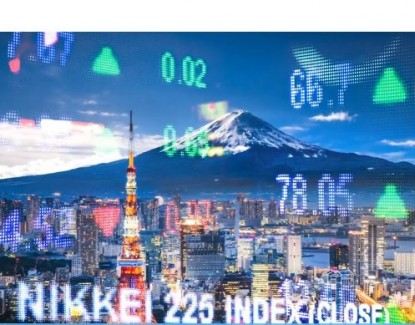
Japanese equities are currently trading at compelling valuation levels compared to other developed equity markets around the world and relative to their own historical averages. We believe the Japanese market deserves a closer look.
-
 Investment Idea
Why Active Matters When Investing in Japan
Masakazu Takeda, CFA, CMAPortfolio Manager
Angus Lee, CFAPortfolio Manager
Tadahiro Fujimura, CFA, CMAPortfolio Manager
Takenari Okumura, CMAPortfolio ManagerRead the Investment IdeaWhen investing in Japanese businesses, we believe it is imperative to select a manager who is immersed in the culture and can perform in-depth, company-specific research to build a concentrated portfolio of Japanese companies that can outperform a benchmark and weather volatility.
-
 Company Spotlight
Japan FundBerkshire Hathaway’s Stake in Tokio Marine Highlights the Appeal of Japanese Insurers
Masakazu Takeda, CFA, CMAPortfolio Manager
Angus Lee, CFAPortfolio ManagerRead the SpotlightTokio Marine is Japan’s largest general insurance group with a solid track record in the domestic market and an expanding overseas business. Tokio Marine is one of three Japanese insurers that has significant market share and enjoys high profitability and strong pricing power due to industry consolidation—qualities Berkshire Hathaway appears to have noticed.
